Tag: transformation

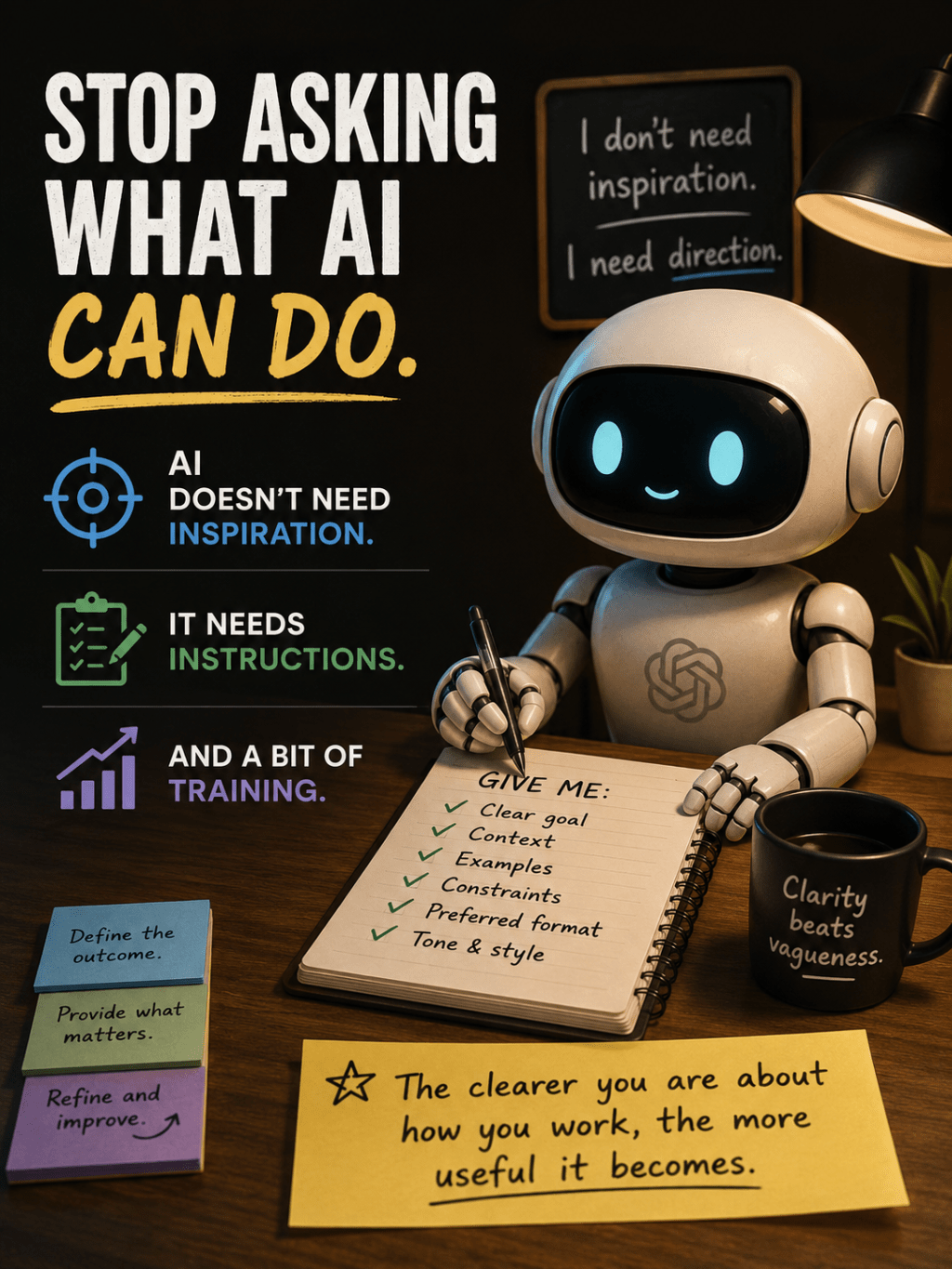
  • Stop Asking What AI Can Do

    Stop Asking What AI Can Do

    Most people ask the wrong question about AI.

    “What can AI do for me?”

    That’s like hiring someone and then asking what skills they happen to have. Nobody competent works that way.

    You start with the job. You define what you need. You break the work down. Then you hire for that. And once you hire, you train. You give context. You correct. You refine.

    AI is no different.

    Look at your actual day. Status updates. Follow-ups. Notes. Deck edits. Repeating yourself in different formats. Break that chaos into the smallest possible tasks and hand them off.

    AI doesn’t need inspiration. It needs instructions. And a bit of training. The clearer you are about how you work, the more useful it becomes.

    Used this way, it’s not a replacement. It’s leverage. It doesn’t change who you are. It just gives you more surface area to operate.

    Stop admiring the tool. Start assigning it work.

    #midnightmusings from the trenches of delivery.
  • Ruthless Simplicity. Relentless Execution.

    Ruthless Simplicity. Relentless Execution.

    Most delivery problems don’t start with technology. They start with process drift.

    Over time, organizations quietly accumulate layers – another tracker, another template, another governance step added after a crisis. None of it feels unreasonable in the moment. But eventually delivery teams spend more time navigating process than delivering outcomes.

    At some point, someone has to ask: Is this actually helping?

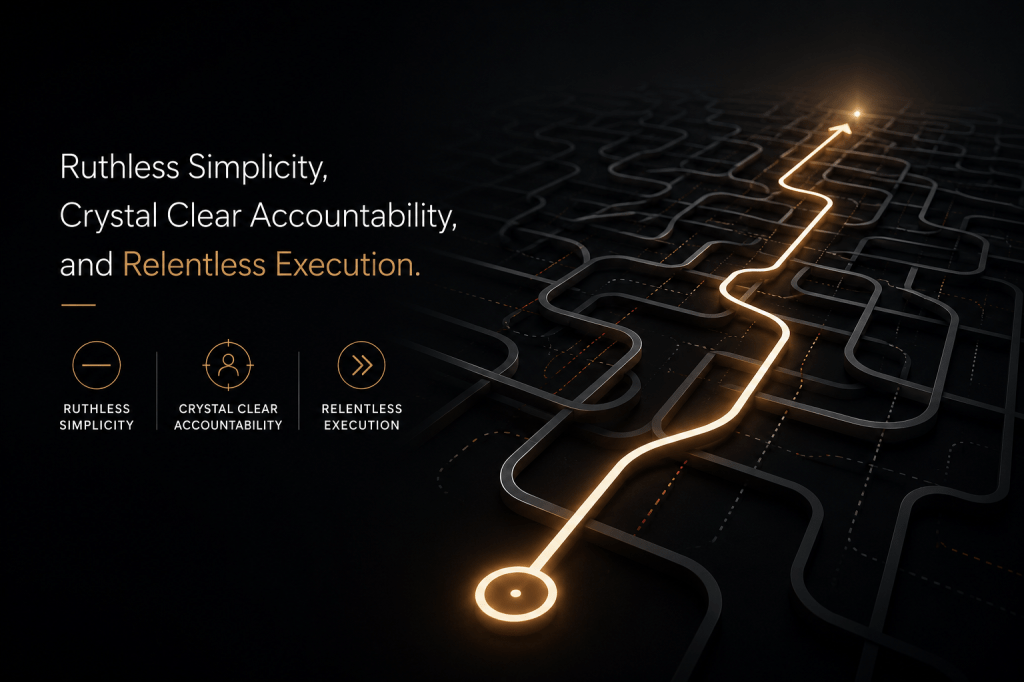
    Recently, our COO Arun Chandra framed operational excellence around three principles – Ruthless Simplicity, Crystal Clear Accountability, and Relentless Execution.

    Simple words. Hard in practice.

    Because Simplicity forces you to remove things. Accountability forces you to name owners. Execution forces you to stop admiring frameworks and start delivering.

    As part of our #AIFirst initiative, we redesigned the NICE Actimize XSE delivery governance model.

    Instead of adding reporting layers, we introduced an AI-driven governance layer across the delivery lifecycle – analyzing signals from risks, timelines, and project updates to surface issues early.

    In practice, it meant collapsing multiple trackers into a single lifecycle model and letting AI highlight emerging risks before they become escalations.

    The goal isn’t more governance.

    It’s better visibility with less friction.

    #Midnightmusings from the trenches of delivery.